


PARK DISTRICT INFORMATION
Land Stewardship & Native Landscapes


POINT OF CONTACT
Lucy Mellen
Sustainability Coordinator
LOCATION
1200 Wilmette Avenue Wilmette, IL 60091
PHONE
(847) 853-7510
Home » Sustainability & Green Initiatives » Land Stewardship & Native Landscapes
-
Native Landscapes
-
Land Stewardship
-
Nature Play in Our Parks
Native Landscapes
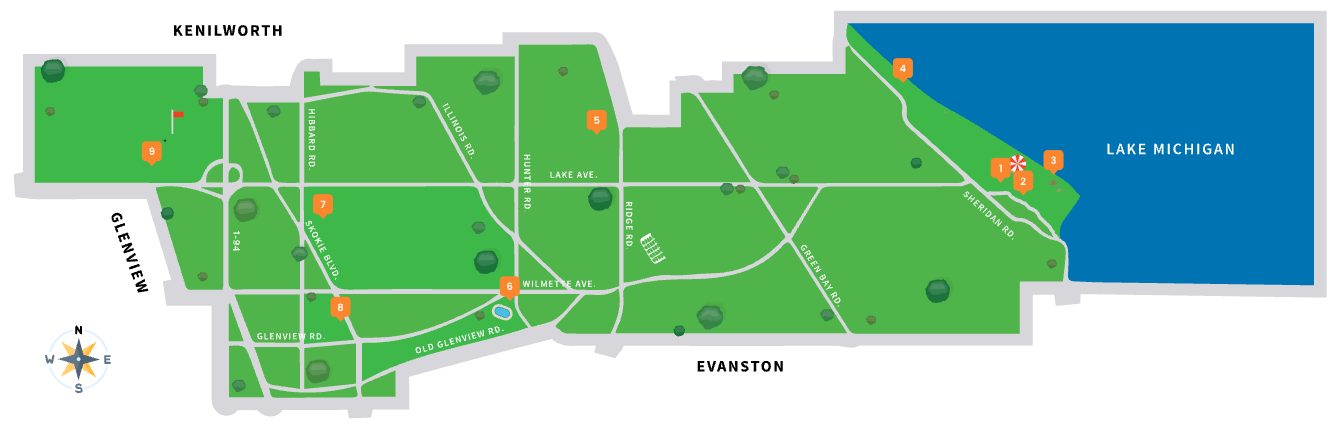
Click the tabs below to learn more about each location pin—numbers correspond to each of our distinct native landscapes:
1) Gillson Bird Habitat
In 2015, the Park District secured a grant from the U.S. Fish and Wildlife Service and The Ouilmette Foundation to establish the Gillson Bird Habitat in Gillson Park. In 2016, with the support of the community, over 250 volunteers and a landscape designer, they successfully planted 20,000 plants in Gillson Park, creating a welcoming haven for migrating birds.
Wilmette’s beautiful lakefront plays a crucial role for migrating birds. Over 325 bird species make round-trip flights annually utilizing the Mississippi Flyway, which comprises the Great Lakes region, to reach their breeding grounds up north. These birds travel at night, and as the sun rises, they need a spot to rest and refuel. If they find themselves over the water, finding land becomes a necessity.
Once they land, the birds require a suitable habitat with the right shelter and food. The ideal habitat provides variety in terms of height and ground litter– something that migrating bird habitats naturally offer. For sustenance, they rely on caterpillars and bugs, which thrive in areas with native plants. These caterpillars are quite selective about their diet, and only consume plant material native to the area.
To learn more about the birds traveling through our region, visit Audubon’s Bird Migration Explorer.
The Gillson Bird Habitat is also home to one of our Lakefront Interpretive Signs, providing visitors with an easy and engaging way to learn about the migratory birds supported along the Mississippi Flyway.
The 2025 Lakefront Interpretive Signs project was supported by funding from the Illinois Coastal Management Program grant, which specifically enabled the manufacturing and installation of the signage in Fall 2025.
Click the button below to view the digital copy of the sign, or browse the list that follows to learn about different bird species that visit the Habitat.
Scientific & Common Name:
About:
The North American American Robin (a thrush with an orange breast) is known for its distinctive chest and song. This frequent lawn visitor eats invertebrates (such as worms and caterpillars), fruits and berries.
QUICK FACT: Robins eat different types of food depending on the time of day—more earthworms in the morning and more fruit later in the day. Because the robin forages largely on lawns, it is vulnerable to pesticide poisoning and can be an important indicator of chemical pollution.
Look for Song Sparrows in nearly any open habitat, including marsh edges, overgrown fields, backyards, desert washes, and forest edges. These little birds commonly visit bird feeders and build nests in residential areas. Scientists recognize 24 subspecies of Song Sparrows and have described some 52 forms—they are one of the most regionally variable birds in North America. In general, coastal and northern birds are darker and streakier, with southern and desert birds wearing paler plumages.
These are active and acrobatic little finches that cling to weeds and seed socks, and sometimes mill about in large numbers at feeders or on the ground beneath them. Goldfinches fly with a bouncy, undulating pattern and often call in flight, drawing attention to themselves. The goldfinch’s main natural habitats are weedy fields and floodplains, where plants such as thistles and asters are common. They’re also found in cultivated areas, roadsides, orchards, and backyards. American Goldfinches can be found at feeders any time of year, but most abundantly during winter.
A bird almost universally considered “cute” thanks to its oversized round head, tiny body, and curiosity about everything, including humans. The chickadee’s colors and markings are distinctive. Its habit of investigating people and everything else in its home territory, and quickness to discover bird feeders, make it one of the first birds most people learn.
QUICK FACT: Chickadee calls are complex and language-like, communicating information on identity and recognition of other flocks as well as predator alarms and contact calls. The more dee notes in a chickadee-dee-dee call, the higher the threat level.
Northern Flickers are large, brown woodpeckers with a gentle expression and handsome black-scalloped plumage. On walks, don’t be surprised if you scare one up from the ground. It’s not where you’d expect to find a woodpecker, but flickers eat mainly ants and beetles, digging for them with their unusual, slightly curved bill. When they fly you’ll see a flash of color in the wings – yellow if you’re in the East, red if you’re in the West – and a bright white flash on the rump.
A graceful, slender-tailed, small-headed dove that’s common across the continent. Mourning Doves perch on telephone wires and forage for seeds on the ground; their flight is fast and bullet straight. Their soft, drawn-out calls sound like laments. When taking off, their wings make a sharp whistling or whinnying. Mourning Doves are the most frequently hunted species in North America.
QUICK FACT: During the breeding season, you might see three Mourning Doves flying in tight formation, one after another. This is a form of social display. Typically the bird in the lead is the male of a mated pair. The second bird is an unmated male chasing his rival from the area where he hopes to nest. The third is the female of the mated pair, which seems to go along for the ride.
2) Gillson Wildflower Preserve
The Gillson Wildflower Preserve, planted in 1973, reflects the Prairie School of Landscape Architecture found throughout Gillson Park. Its design is intentionally open—paths are hidden so plants can be viewed from all angles, making the preserve feel like one sweeping, continuous habitat.
Peat moss was added to enrich the partly clay soil and improve drainage and nutrients. Nearly 50 native wildflower and fern species were planted at the start, and many more have been added since, including members of the daisy family like sunflowers, fleabanes and joe-pye weed.
This preserve supports a diverse ecosystem. Birds, bees and butterflies rely on these plants for food and shelter—many even raise their young here. Rabbits and deer also browse the flowers and leaves.
The Gillson Wildflower Preserve is also home to one of our Lakefront Interpretive Signs, providing visitors with an easy and engaging way to learn about the ecological significance of the wildflower preserve and the role of native plants and pollinators.
The 2025 Lakefront Interpretive Signs project was supported by funding from the Illinois Coastal Management Program grant, which specifically enabled the manufacturing and installation of the signage in Fall 2025.
Click the button below to view the digital copy of the sign, or browse the list that follows for additional information about local plant species found at the Preserve.
Botanical & Common Name
Host to:
Host to Monarch butterfly caterpillars, but also supports Queen butterflies, various bees (like bumblebees, sweat bees), moths (such as Delicate Cycnia), and other beneficial insects like hover flies and assassin bugs, attracting them as nectar sources and for larval development, while its bitter taste deters deer and rabbits.
A crucial host plant for the Monarch butterfly and Queen butterfly caterpillars, which feed on its leaves, while its nectar attracts many pollinators like bees, hummingbirds, fritillaries, and swallowtails, making it a vital native plant for diverse pollinators and a food source for insects like milkweed tussock moths and beetles.
Essential host plants for the Baltimore Checkerspot butterfly, supporting its larvae, and also provide nectar for various pollinators like bumblebees, hummingbirds, and other butterflies, attracting them with their late-season, turtle-head-shaped flowers in moist to wet soils. They are great for rain gardens and wetland edges, thriving in sun to part shade and preferring rich, moist to wet conditions.
Host to Silvery Checkerspot butterfly, providing food for its caterpillars, and supports other pollinators like bees, moths (e.g., Wavy-Lined Emerald), and even birds (Goldfinches eating seeds), making it excellent for native gardens to boost local insect and bird life. The pale purple coneflower attracts a wide range of pollinators, including ants, bees, beetles, butterflies, flies, moths, skippers, and wasps. With its fragrant scent and attractive color, the pale purple coneflower is a popular choice for attracting bumblebees, large carpenter bees, and leaf-cutting bees. Mining bees in particular are an important specialist for the pale purple coneflower. Many butterflies like the American lady, red admiral, and eastern tiger swallowtail can be found on pale purple coneflowers. Small songbirds like goldfinches are attracted to the seeds.
A fantastic host for many native butterflies and moths, including Swallowtails, Monarchs, Painted Ladies, Ruby Tiger Moths, and Three-Lined Flower Moths, providing nectar for adults and foliage for caterpillars, plus seed heads for birds. This compact Joe Pye Weed supports pollinators like bees and skippers, offering significant ecological benefits in gardens.
Prairie smoke is known to attract a variety of pollinators, including ants, bees, beetles, and wasps. The primary pollinators of prairie smoke are bumblebees.The flowers of prairie smoke are pollinated using buzz pollination. Bees will vibrate their bodies against the petals in search of nectar. This causes the pollen to be shaken out. A species of leaf beetle (Graphops marcassita) feeds on the foliage of prairie smoke, while the larvae may feed on the roots.
Serves as a host plant for various insects, notably several butterfly/moth species like the Gray Hairstreak, Nevada Skipper, and certain grass-eating grasshoppers, providing food and shelter for their larvae, while also supporting beneficial leafhoppers and attracting pollinators for its flowers, making it vital for prairie ecosystems.
Rough blazing star is known to attract ants, bees, beetles, birds, butterflies, flies, hummingbirds, moths, skippers, and wasps. The nectar of rough blazing star attracts many different butterfly species including monarchs, painted ladies, and tiger swallowtails. For songbirds, the seeds are the most attractive aspect of rough blazing star. Rough blazing star serves as a host plant for the larvae of numerous small species of moths, including the blazing star borer moth.
The tubular flowers of foxglove penstemon are known to attract bees, beetles, butterflies, hummingbirds, moths, and wasps. Along with attracting honeybees and bumblebees, foxglove penstemon sustains two specialist pollinators: miner bees (Osmia distincta) and pollen-collecting wasps (Pseudomasaris occidentalis). Foxglove penstemon hosts larvae of 13 moth and butterfly species, including the buckeye butterfly.
Hairy penstemon is known to attract a variety of pollinators, including bees, butterflies, flies, hummingbirds, skippers, and wasps. Hairy penstemon serves as a host plant for the larvae of the Baltimore checkerspot butterfly.
A vital host plant, especially for numerous skipper butterfly larvae (like Cobweb, Crossline, Dusted, Leonard’s, and Ottoe Skippers) and the Common Wood Nymph, offering them food and shelter, while also providing seeds and cover for birds, nesting material, and grazing for wildlife, making it excellent for pollinator gardens and habitat restoration.
Hosts pollinators like Ruby-throated Hummingbirds, Black Swallowtail, and Eastern Tiger Swallowtail butterflies, attracting them with its nectar, while its sticky stems trap small insects as a defense, sometimes becoming food for insectivorous birds. It thrives in sunny prairie/savanna habitats with well-drained, medium to dry soil, benefiting from companion plants like Little Bluestem and Yellow Coneflower.
A vital host plant for caterpillars like the Pearl Crescent and Silvery Checkerspot butterflies, as well as various moths, while also providing crucial late-season nectar for pollinators like bees (specialist and generalist) and Monarch butterflies, plus food (seeds) for birds and small mammals, making it a top native plant for supporting local ecosystems.
A vital host plant, especially for pollinators, serving as a crucial late-season nectar source for bees, butterflies (like the Pearl Crescent and Silvery Checkerspot caterpillars), moths (Asteroid, Aster Borer), and attracting various other insects and birds for food and shelter.
a vital native plant, serving as a host for caterpillars like the Pearl Crescent and Silvery Checkerspot butterflies, and a crucial late-season nectar/pollen source for diverse bees, butterflies, and other pollinators, supporting local ecosystems. It’s a versatile perennial for gardens, thriving in woodland settings with partial shade but tolerating sun and dry to medium soils, providing food and habitat for numerous beneficial insects and even some birds.
A fantastic native plant that serves as a vital host for many caterpillars, including the Wavy-lined Emerald, and provides nectar for various bees, butterflies, and moths, with seeds for birds, attracting pollinators and supporting local ecosystems. It’s a tall, adaptable perennial, thriving in moist soils, full sun to part shade, and known for attracting Monarchs during migration, making it great for natural areas or larger garden
A popular wildflower host plant for butterflies like the Silvery Checkerspot, Bordered Patch, and Pearl Crescent, as well as various moths, providing nectar for pollinators and seeds for birds like goldfinches, making it great for native gardens and prairies. The name “host” refers to its ecological role as a food source and habitat for specific insects and wildlife.
Is a host for the rare Ottoe Skipper butterfly and a specific aphid (Protaphis echinaceae), while also supporting diverse pollinators like native bees, butterflies (Monarchs, Swallowtails), and finches, providing nectar, pollen, and seeds, making it crucial for prairie ecosystems.
A host plant for various insects, notably the leaf-mining fly (Liriomyza eupatoriella) leaving distinctive trails, and several moths like the Ruby Tiger Moth (Phragmatobia fuliginosa) and Clymene Moth, providing food for their caterpillars, while its nectar benefits bees, butterflies, and wasps. Despite its toxicity to livestock (causing milk sickness), it’s a valuable native plant for supporting local ecosystems, attracting pollinators, and providing seeds for birds.
Primarily serves as a crucial larval host plant for the Columbine Duskywing butterfly (Erynnis lucilius) and is also a host for the Pink-Tinted Beauty moth, supporting native pollinators like hummingbirds, bees, and butterflies with its nectar. While insects munch on the leaves, it doesn’t significantly harm the plant, allowing it to support wildlife and beautify gardens in woodland or shady areas.
A crucial host plant, primarily for Monarch butterfly caterpillars, which feed exclusively on its leaves, and also for Queen butterflies and Milkweed Tussock Moths, while its nectar supports many other pollinators like bees, wasps, and beetles.
A host plant for several Skipper butterflies and moths, including the Dotted Skipper, Leonard’s Skipper, Ottoe Skipper, Green Skipper, and Sheep Skipper, providing food and shelter for their larvae, while its seeds also attract various birds, small mammals, and beneficial insects. It’s a valuable native grass for prairies and gardens, supporting diverse wildlife.
Hosts specific pollinators and insects, providing nectar and shelter, especially for native bees and moths, and a host for at least one butterfly species, supporting local ecosystems and attracting wildlife to gardens. They thrive in sunny spots with dry to medium soil, offering late-season blooms (June-Sept) that attract hummingbirds and are deer-resistant, making them excellent additions for wildlife gardens.
A native North American wildflower and a crucial host plant for the caterpillars of the Black Swallowtail butterfly and Ozark Swallowtail butterfly, providing their primary food source and habitat. This plant, a member of the parsley family, also serves as a valuable nectar source for many pollinators, including bees, butterflies, flies, and wasps, especially in early spring when other flowers are scarce, supporting local ecosystems.
Primarily a vital nectar source and pollinator plant for strong native bumblebees, who are the only insects able to pry open its unique, closed, bottle-shaped flowers for nectar, though it’s also a host for some butterflies/moths and a late-season food for deer, with its bitter foliage usually avoided.
A valuable native plant, acting as a crucial host for 70+ butterfly/moth species (like Silvery/Gorgone Checkerspots, Painted Ladies) and providing food (seeds, foliage) for bees, birds (goldfinches!), and small mammals, creating important habitat, though it spreads aggressively via rhizomes and allelopathy, requiring thoughtful placement in native gardens for wildlife support.
Spotted Touch-Me-Not (Impatiens capensis), also called Jewelweed, hosts many creatures, especially hummingbirds (Ruby-throated) for nectar, bees, butterflies, and various insects like grasshoppers, beetles, and moth caterpillars that eat leaves and buds. Birds and small mammals (mice, shrews) eat its seeds, while White-tailed Deer sometimes browse the foliage, making it a valuable, pollinator-friendly native plant for moist, shady spots.
A tough, adaptable, native North American rush known as a “host” plant because it thrives in disturbed, compacted soils like footpaths, roadsides, and even lawns, tolerating sun/shade and wet/dry conditions, making it excellent for erosion control, rain gardens, and as a lawn alternative that supports pollinators and beneficial insects. It forms compact clumps, is drought-tolerant once established, and is resistant to deer and rabbits, making it a versatile, low-maintenance groundcover.
Serves as a crucial host for numerous insects, especially moths like the iconic Primrose Moth, whose caterpillars eat the pods, and the White-lined Sphinx Moth, while its flowers feed night pollinators (moths, bats, bees) and its seeds feed birds like goldfinches. It’s a valuable native plant for sandy soils, supporting diverse wildlife, from small mammals to specialized bees.
A vital host plant for numerous insects, especially moths like the Wavy-Lined Emerald Moth, supporting pollinators like bees, butterflies, and beneficial insects with late-season nectar and pollen, while also providing food and habitat for birds, making it excellent for woodland shade gardens.
3) Gillson Beach & Dunes
Lake Michigan has gradually reshaped Gillson Beach into a natural dune ecosystem. These fragile formations support unique plant and animal life but are highly susceptible to erosion. Elsewhere on the coast, hard stabilization (like jetties and seawalls) blocks sand from naturally replenishing Illinois beaches. As a result, the remaining dunes are shrinking, threatening habitats and recreation. To preserve this delicate landscape, the Park District uses native plantings and sand fences, and reduces paved surfaces to prevent runoff.
Our maintenance crew takes great pride and care of the dunes at Gillson Beach. Our groundskeeper, Rito, patrols the grounds from Spring to Fall removing invasive species such as willow and buckthorn from the dunes and the grounds. Mitigating these invasives as much as possible possible allows for more native plants and wildlife to thrive. Invasives can force out native plants, consuming everything around them. Therefore it’s important to monitor the grounds and insure that everything is healthy. The dunes along Gillson Beach are very fragile; Wilmette Park District keeps fencing around the dunes to keep guests off and insure that the dunes dont collapse. Wilmette Park District also plants dune grasses and keeps them healthy to create a stronger root system. Staying off the dunes and dune grasses is vital to keeping them healthy and intact.
Gillson Beach is also home to one of our Lakefront Interpretive Signs, providing visitors with an easy and engaging way to learn about the dunes and the historical development of Gillson’s shoreline.
The 2025 Lakefront Interpretive Signs project was supported by funding from the Illinois Coastal Management Program grant, which specifically enabled the manufacturing and installation of the signage in Fall 2025.
Click the button below to view the digital copy of the sign.
4) Langdon Beach & Bluff
Langdon Beach and Bluff has a long history of ecological shifts and shoreline erosion. Mitigation efforts date back to 1857 when Henry Gage built three piers to slow erosion at the site we know today as Langdon. More than a century later, the Wilmette Park District acquired the land and opened it to the public.
Erosion closed the beach in 2020, prompting the installation of rock revetments to shield the bluff from wave damage. Additional restoration throughout 2024–2025 further strengthened the shoreline and added an accessible path, making the park safer and more inclusive.
Langdon Beach and Bluff has been a staple to the Wilmette Community for generations, and the redevelopment of the shoreline will secure its place in Wilmette’s landscape and ecology for many years to come.
Langdon Beach is also home to one of our Lakefront Interpretive Signs, providing visitors with an easy and engaging way to learn about the bluff restoration and the historical development of Langdon’s shoreline.
The 2025 Lakefront Interpretive Signs project was supported by funding from the Illinois Coastal Management Program grant, which specifically enabled the manufacturing and installation of the signage in Fall 2025.
Click the button below to view the digital copy of the sign.
A sustainable feature you may not notice above Langdon Beach are the Permeable Pavers. These low profile pavers were installed to provide a place for maintenance vehicles to pull in and park when on site. Not only do they blend in with the greenspace aesthetic by allowing plants to grow on the surface, but permeable pavers are an environmentally friendly alternative to a paved driveway. Instead of quickly running off into storm drains, rainwater is able to pass through the surface and gradually soak into the soil, mimicking the natural water cycle. This process reduces runoff, filters pollutants and helps replenish groundwater!
Keep an eye out for our Interpretive Sign at Langdon – installation is planned for Fall 2026!
Click the button below to view the digital copy of the sign.
5) Mallinckrodt Gardens
The Mallinckrodt gardens were initially established in the fall of 2007, when the Park District acquired the property. The garden was revitalized in 2015, when the soil was amended and supplemental plantings were added. There are a wide variety of plants at Mallinckrodt, including native species such as Black-Eyed Susans, Joe-Pye weed, Goldenrods, Purple Coneflowers and various Milkweed species.
In Summer 2025, our Horticulturist focused on working the shade garden on the southeast end of Mallinckrodt Park. Weeds and unwanted plant material were removed to make way for new shade-tolerant, native species including Columbine, Geranium and Early Meadow Rue. Native seed was also supplemented into the garden bed to help it establish. The bed was mulched in the fall to protect the young root system during the cold months.
6) Centennial Prairie Garden
The Wilmette Park District developed a Native Illinois prairie garden within the detention area located at the north end of Centennial Park.
Seed plantings began in the fall of 2010. Now established, the garden attracts numerous birds, butterflies and other wildlife.
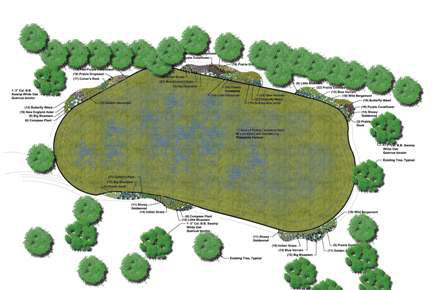
Click Here
 to download a PDF rendering of the 2010 garden site plan (shown to the right).
Citizens promptly petitioned for an election to organize a Park District. An election was held in January of 1908 and the first Board of Commissioners was designated. Of the 211 votes cast, 174 were in favor of establishing a park district and 37 were against. The Park District, a distinct and independent municipal body, encompassed the entire Village of Wilmette—which had a western boundary at the center line of Ridge Road. A portion of northeast Evanston was also included but later chose to be annexed to Evanston.
The new Park District immediately set out to acquire the canal’s “made land” and established a goal of creating a continuous lakefront park stretching north from the new harbor basin. Although the Park District did not officially acquire the canal acreage until state legislation was passed on May 25, 1911, a combination of purchases, property condemnations, lease agreements and a gift of land from Northwestern University soon resulted in one nearly continuous stretch of land between Lake Avenue to 70 feet north of Forest Avenue—including all riparian rights.
The first park development was begun in 1910 between Lake and Forest Avenues with the grading and installation of drainage, planting of trees and sodding of a bluff area which at the time was being eroded by waves. Street lights and sidewalks were also installed. Later construction of a pier for the Wilmette Harbor and placement of shore protecting bulkheads gradually developed a sandy beach area of 10 acres where only one and a half acres had originally been obtained. In 1916 the park on the bluff was named Ouilmette Park in honor of Wilmette’s first citizen, Anton Ouilmette, whose residence was located near the intersection of Lake and Michigan avenues.
The Park District discovered the acreage created by the canal excavation was almost exclusively an impervious blue clay. It was not until 1917 that the first trees could be planted in soil which had been coaxed into existence through a series of cow pea and mullet plantings which were plowed under to create humus matter. This area became known as Washington Park.
Between 1911-1914 the Park District purchased a total of 11 lots to create West Side Park, known today as Vattmann Park. In 1914 the Park District began purchasing land east of Michigan Avenue between Washington and Lake avenues in hopes of creating a continuous lakefront park. The Park District acquired the “Church Triangle” at the intersection of 11th Street, Lake and Wilmette avenues in 1916 and leased Bateman Park (Sheridan Road and Michigan Avenue) from the Sanitary District of Chicago the same year.
The canal right-of-way at the east end of Greenleaf Avenue became the site of the first public ice skating rink in Wilmette and the present day Wallace Bowl was used as the Village dumping ground for eight years. In June of 1916 the Wilmette Woman’s Club was granted permission to establish public bathing facilities along the lakefront at the foot of Lake Avenue and north about 300 feet. The Wilmette Beach was thus established. After one year of successful operation by the Woman’s Club, the Park District purchased the beach equipment and opened a municipal beach—taking over responsibility for the maintenance of the facility.
Phase One : Native upland prairie flowers and grasses surrounding part of the detention basin were planted in June of 2010, by Wilmette Boy Scout Troop 2. In November the one acre detention basin was planted with wetland prairie seeds. (Planning and design by Charlotte Adelman and 3D Design Studio).
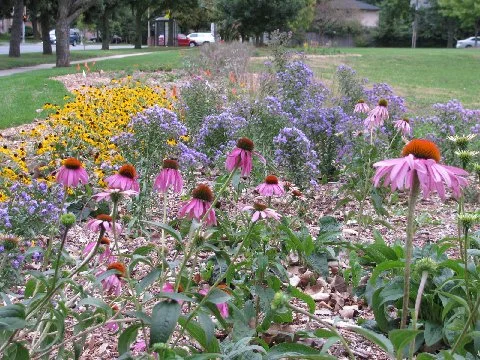
Photo taken by Joe Bruner, Boy Scout Troop 2, in September 2010 of a portion of the upland prairie flowers and grasses planted in June 2010. Visitors observed goldfinches, native sparrows, bees and a variety of skippers and butterflies that were attracted to the upland prairie’s Purple Coneflowers, Orange Coneflowers, New England Asters and Blue Vervains. Although not shown in this picture, the prairie’s abundance of several colorful and fragrant species of native milkweeds attracted numerous female egg-laying monarch butterflies which produced monarch butterfly caterpillars.
Phase Two : Additional native upland prarie flowers and grasses were planted by Wilmette Boy Scout Troop 2 in June 2011 to create a 15-foot wide border surrounding the entire detention basin. (Planning and design by Charlotte Adelman and Joe Bruner).
Listed below are the seeds planted in the (wetland) detention basin.
Listed below are the seeds planted in the (wetland) detention basin.
Forbs/Flowers
- Acorus calamus (Sweet Flag)
- Alisma subcordatum (Mud Plantain)
- Allium cernuum (Nodding Onion)
- Anemone canadensis (Canada Anemone)
- Angelica atropurpurea (Angelica)
- Asclepias incarnata (Swamp Milkweed)
- Aster novae-angliae (New England Aster)
- Aster umbellatus (Flat-Topped Aster)
- Baptisia alba (White Wild Indigo)
- Boltonia asteroides (False Aster)
- Cacalia suaveolens (Sweet Indian Plantain)
- Cassia hebecarpa (Wild Senna)
- Chelone glabra (Turtlehead)
- Dodecatheon amethystinum (Amethyst Shooting Star)
- Dodecatheon meadia (Midland Shooting Star)
- Eupatorium maculatum (Joe Pye Weed)
- Eupatorium perfoliatum (Boneset)
- Filipendula rubra (Queen of the Prairie)
- Gentiana andrewsii (Bottle Gentian)
- Helenium autumnale (Sneezeweed)
- Heliopsis helianthoides (Early Sunflower)
- Hibiscus militaris (Rose Mallow)
- Hypericum pyramidatum (Great St. John’s Wort)
- Iris virginica shrevei (Southern Blue Flag)
- Liatris ligulistylis (Meadow Blazing Star)
- Liatris pycnostachya (Prairie Blazing Star)
- Liatris spicata (Marsh Blazing Star)
- Lobelia cardinalis (Cardinal Flower)
- Lobelia siphilitica (Great Blue Lobelia)
- Lycopus americanus (Water Horehound)
- Lysimachia quadriflora (Prairie Loosestrife)
- Mimulus ringens (Monkey Flower)
- Pedicularis lanceolata (Marsh Betony)
- Phlox glaberrima interior (Marsh Phlox)
- Physostegia virginiana (Obedient Plant)
- Pycnanthemum virginianum (Mountain Mint)
- Rudbeckia hirta (Black-eyed Susan)
- Rudbeckia subtomentosa (Sweet Black-eyed Susan)
- Rudbeckia triloba (Brown-eyed Susan)
- Silphium laciniatum (Compass Plant)
- Silphium perfoliatum (Cup Plant)
- Silphium terebinthinaceum (Prairie Dock)
- Solidago ohioensis (Ohio Goldenrod)
- Solidago riddellii (Riddell’s Goldenrod)
- Thalictrum dasycarpum (Purple Meadow Rue)
- Verbena hastata (Blue Vervain)
- Vernonia fasciculata (Common Ironweed)
- Veronicastrum virginicum (Culver’s Root)
- Zizia aurea (Golden Alexanders)
Grasses/Sedges/Rushes
- Andropogon gerardii (Big Bluestem)
- Bromus ciliatus (Fringed Brome)
- Calamagrostis canadensis (Blue Joint Grass)
- Carex bebbii (Bebb’s Oval Sedge)
- Carex comosa (Bristly Sedge)
- Carex hystericina (Porcupine Sedge)
- Carex lupulina (Common Hop Sedge)
- Carex stipata (Common Fox Sedge)
- Carex vulpinoidea (Brown Fox Sedge)
- Elymus canadensis (Canada Wild Rye)
- Elymus virginicus (Virginia Wild Rye)
- Glyceria grandis (Reed Manna Grass)
- Juncus canadensis (Canada Rush)
- Juncus interior (Inland Rush)
- Juncus interior (Inland Rush)
- Panicum virgatum (Switch Grass)
- Scirpus atrovirens (Dark-green Bulrush)
- Scirpus cyperinus (Wool Grass)
- Scirpus validus (Great Bulrush)
- Sorghastrum nutans (Indian Grass)
- Spartina pectinata (Cord Grass).
Listed below are the plants (native prairie grasses and flowers) planted and scheduled to be planted in the upland areas surrounding the detention basin.
Native Prairie Grasses & Flowers
- Agastache foeniculum (Anise Hyssop)
- Andropogon gerardii (Big Bluestem) – Host plant for Common Wood Nymph, Arogos Skipper and Cobweb Skipper Butterflies
- Andropogon scoparius (Little Bluestem) – Host plant for Common Wood Nymph, Cobweb Skipper, Crossline Skipper and Swarthy Skipper Butterflies
- Apocynum cannabinum (Dogbane/Indian Hemp) – Called the Number One Butterfly Attracting Flower
- Asclepias purpurascens (Purple Milkweed) – Host plant for Monarch Butterflies (Female monarch butterflies only reproduce on Milkweed species)
- Asclepias sullivantii (Sullivant’s Milkweed) – Host plant for Monarch Butterflies
- Asclepias tuberose (Orange Butterfly Milkweed) – Host plant for Monarch Butterflies
- Asclepias verticillata (White Milkweed) – Host plant for Monarch Butterflies
- Aster azureus (Sky Blue Aster) – Host plant for Pearl Crescent Butterflies
- Aster novae-angliae (New England Aster) – Host plant for Pearl Crescent Butterflies
- Baptisia australis (Blue Wild Indigo) – Host plant for Wild Indigo Duskywing, Silvery Blue, Frosted Elfin, Hoary Edge, Orange Sulphur and Eastern Tailed-Blue butterflies
- Batisia alba (White Wild Indigo) – Host plant for Wild Indigo Duskywing, Silvery Blue, Frosted Elfin, Hoary Edge,Orange Sulphur and Eastern Tailed-Blue butterflies
- Campanulastrum americanum (American Bellflower) – Attracts a tiny oligolectic (specialist) bee, Megachile campanulae campanulae
- Chasmanthium latifolium (Northern Sea Oats, River Oats) – Host plant for Pepper & Salt Skipper, Bells Roadside Skipper and Bronzed Roadside Skipper butterflies
- Cirsium discolor (Field Thistle) – Host plant for American Lady Butterflies
- Coreopsis palmata (Prairie Coreopsis)
- Dalea purpurea (Purple Prairie Clover) – Host plant for Southern Dogface Butterflies
- Echinacea pallida (Pale Purple Coneflower)
- Echinacea purpurea (Purple Coneflower)
- Eryngium yuccifolium (Rattlesnake Master) – Host plant for Black Swallowtail and Anise Swallowtail Butterflies
- Eupatorium Purpureum (Joe Pye Weed) – Host plant for Painted Lady Butterflies
- Euphorbia corollata (Flowering Spurge)
- Geranium maculatum (Wild Geranium)
- Heliopsis helianthoiodes (Early Sunflower) – Host plant for Gorgone checkerspot and American Painted Lady Butterflies
- Heracleum maximum (Common Cowparsnip) – Host plant for Black Swallowtail and Anise Swallowtail Butterflies
- Impatiens capensis (Orange Jewelweed) – A magnet for hummingbirds
- Liatris ligulistylis (Meadow Blazing Star) – Host plant for Painted Lady Butterflies & a magnet for monarch butterflies
- Monarda bradburiana (Bradbury’s Monarda)
- Monarda fistulosa (Wild Bergamot)
- Oligoneuron ohioense (Ohio Goldenrod)
- Panicum virgatum (Switch Grass) – Host plant for Dotted Skipper and Tawny Edged Skipper Butterflies
- Parthenium Integrifolium (Wild Quinine)
- Penstemon grandiflorus (Large-Flowered Beardtongue)
- Ratibida pinnata (Yellow Coneflower)
- Rudbeckia fulgida (Orange Coneflower)
- Rudbeckia subtomentosa (Sweet Black-eyed Susan) – Host plant for Silvery Checkerspot Butterflies
- Ruellia humilis (Wild Petunia) – Host plant for Common Buckeye Butterflies
- Silene regia (Royal Catchfly – attracts hummingbirds
- Silphium laciniatum (Compass Plant)
- Silphium perfoliatum (Cup Plant)
- Silphium terebinthinaceum (Prairie Dock)
- Solidago speciosa (Showy Goldenrod)
- Sorghastrum nutans (Indian Grass) – Host plant for Skipper butterflies
- Sporobolus heterolepis (Northern Dropseed)
- Three Quercus bicolor (Swamp White Oak) – Native Oaks are Host plant for Edwards’ Hairstreak and other Hairstreaks and Juvenal’s Duskywing butterflies
- Tradescantia (Spiderwort) – Host plant for Buckeye butterflies
- Verbena hastata (Blue Vervain) – Host plant for Buckeye Butterflies
- Vernoia fasciculata (Common Ironweed) – Host plant for Mourning Cloak and American Lady butterflies
- Veronicastrum virginicum (Culver’s Root)
- Zizia aurea (Golden Alexanders) – Host plant for Black Swallowtail and Anise Swallowtail butterflies
Also harvested from the site in the blue protection covers are Swamp White Oaks that will be transplanted at a future date.
7) Keay Nature Center
Keay Nature Center, located at the corner of Skokie Boulevard and Hibbard Road, is a nature park featuring a winding path, water feature, and myriad native plants.
When visiting Keay, you will be met with a plethora of flora and fauna, including various native habitat gardens. Gardens within Keay Nature Center include rain gardens for greater water absorption and filtration, and native woodland, wetland and prairie gardens. A variety of animals can be found throughout the park. Consider checking out the pond located at the southwest end of the park to see fish, geese, ducks and more!
If you find yourself in Keay Nature Center in the spring, you can see native ephemerals such as Prairie Trillium, White Trillium Mayapples, Trout Lillies and Virginia Bluebells. Come summertime, you will find Black-Eyed Susans, Joe-Pye weed, Goldenrods, Purple Coneflowers, Nodding Onions, Culvert’s Root and various Milkweed and Aster species. Additionally, the tree collection at Keay features native trees such as Northern Catalpa, Red Oak, Sugar Maple, White Pine, Hackberry and Redbud.
A sustainable feature you may not notice at Keay Nature Center are the Permeable Pavers. These low profile pavers were installed to provide a place for maintenance vehicles to pull in and park when on site. Not only do they blend in with the greenspace aesthetic by allowing plants to grow on the surface, but permeable pavers are an environmentally friendly alternative to a paved driveway. Instead of quickly running off into storm drains, rainwater is able to pass through the surface and gradually soak into the soil, mimicking the natural water cycle. This process reduces runoff, filters pollutants and helps replenish groundwater!
Keep an eye out for our Interpretive Sign at Keay – installation is planned for Fall 2026!
Click the button below to view the digital copy of the sign.
8) Hibbard Pollinator Gardens
Hibbard Park is home to two native Pollinator Gardens along Skokie Boulevard. The gardens were established in 2025 as part of a larger park renovation which was funded by an Illinois Department of Natural Resources Open Space Lands Acquisition and Development (OSLAD) Grant, with support from the Wilmette Park District.
These North and South Gardens feature diverse native plants that sustain pollinators year-round. Each planting was chosen to provide food and shelter for birds, bees and insects every season.
The Hibbard Pollinator Gardens are also home to one of our Interpretive Signs, providing visitors with an easy and engaging way to learn about the ecological significance of the garden and the role of native plants and pollinators.
The 2025 Hibbard Park OSLAD Grant Project included the manufacturing and installation of the signage in Fall 2025.
Click the button below to view the digital copy of the sign.
9) Wilmette Golf Club
The Wilmette Golf Club employs a variety of environmentally-sustainable landscaping practices. Natural areas on the course include three acres of low/no-mow area; a one-acre bioswale; and six acres of water habitat.
Our Golf Club attempts to conserve water whenever possible. The course utilizes two 800-foot wells and a reservoir for irrigation and maintenance water. Additionally, the driving range (5 acres) is not watered in the summer to save water for more crucial areas.
Land Stewardship
Native Habitats
Our aim at the Wilmette Park District is to not only increase and enhance our natural areas but also to preserve the beneficial existing trees and shrubs that grace our community.
Across all 17 parks within the District, you’ll find a rich array of diverse plants and wildlife. These elements play a crucial role in maintaining and supporting the varied ecosystems present throughout Wilmette. As stewards of these natural resources, we are committed to fostering a deeper connection between our community and the environment, inviting patrons to explore, learn, and appreciate the beauty and significance of our local ecosystems.
Sustainable Stormwater Management
Sustainable stormwater management, also called green infrastructure, aims to reduce stormwater runoff and improve water quality through natural hydrologic cycles. This includes site grading, vegetation, and natural processes that aid in the absorption and filtration of stormwater.
The Wilmette Park District utilizes sustainable stormwater management practices through the installation of rain gardens, bioswales, and permeable pavements. Rain gardens and bioswales can be found at Shorewood Park, Hibbard Park, Wilmette Golf Club, and Keay Nature Center. Permeable pavement can be found at Keay Nature Center.
Tree Inventory
The Wilmette Park District began inventorying the trees on our land in 2021. The inventory records various characteristics, including, but not limited to, location, park type, tree status, tree type, size, risk level, condition, native status and arborist recommendations, all using GIS software. This inventory enables Park District staff to monitor trees without the need to travel to each location, aids in planning tree maintenance, and facilitates the development of landscape plans. As of April 2024, there were 3,610 trees inventoried on Park District land.
What Are Invasive Species?
Invasive species are plants that were once introduced to an ecosystem where they do not naturally belong. These species are harmful to the environment because they can often have rapid reproduction rates and lack natural population control methods. Therefore, they spread very quickly and freely, often outcompeting and choking out beneficial, native plant species.
The District’s Parks and Planning Department works hard to continually monitor and remove invasive species to help keep our parks’ ecosystems healthy and thriving.
Nature Play in Our Parks
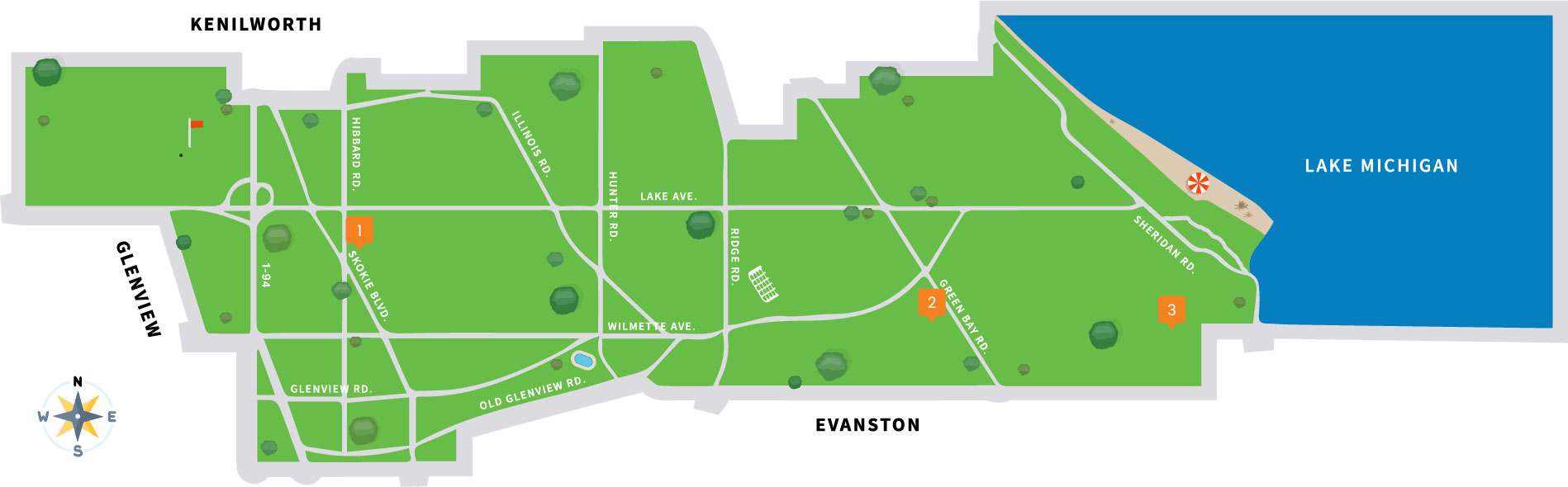
What is Nature Play?
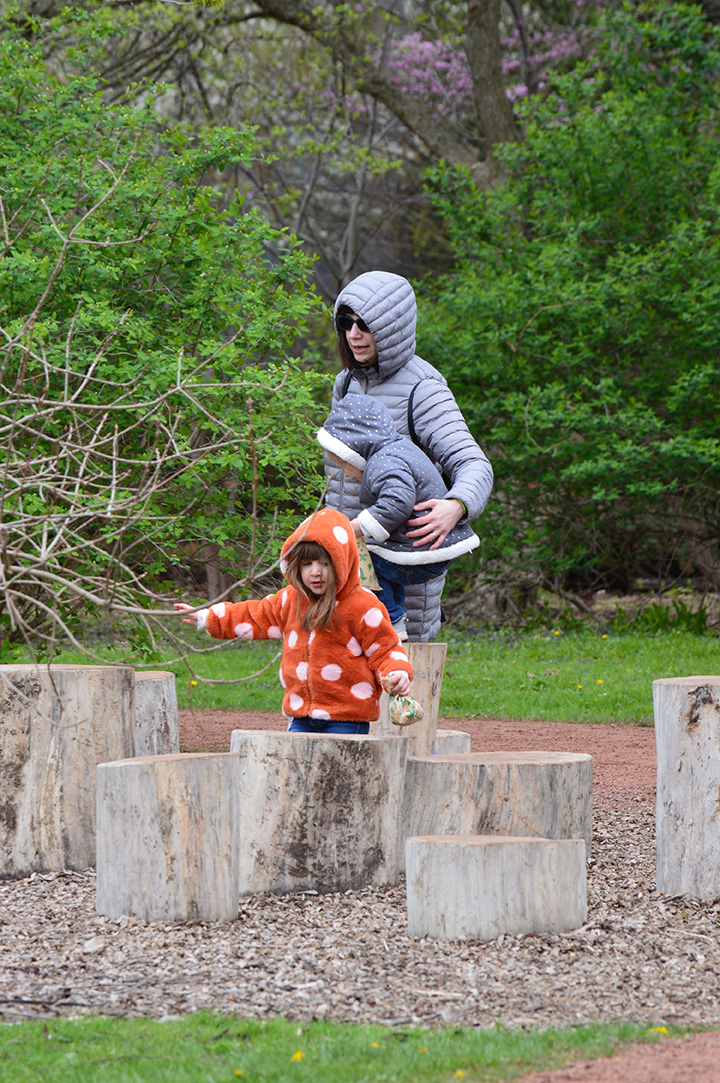
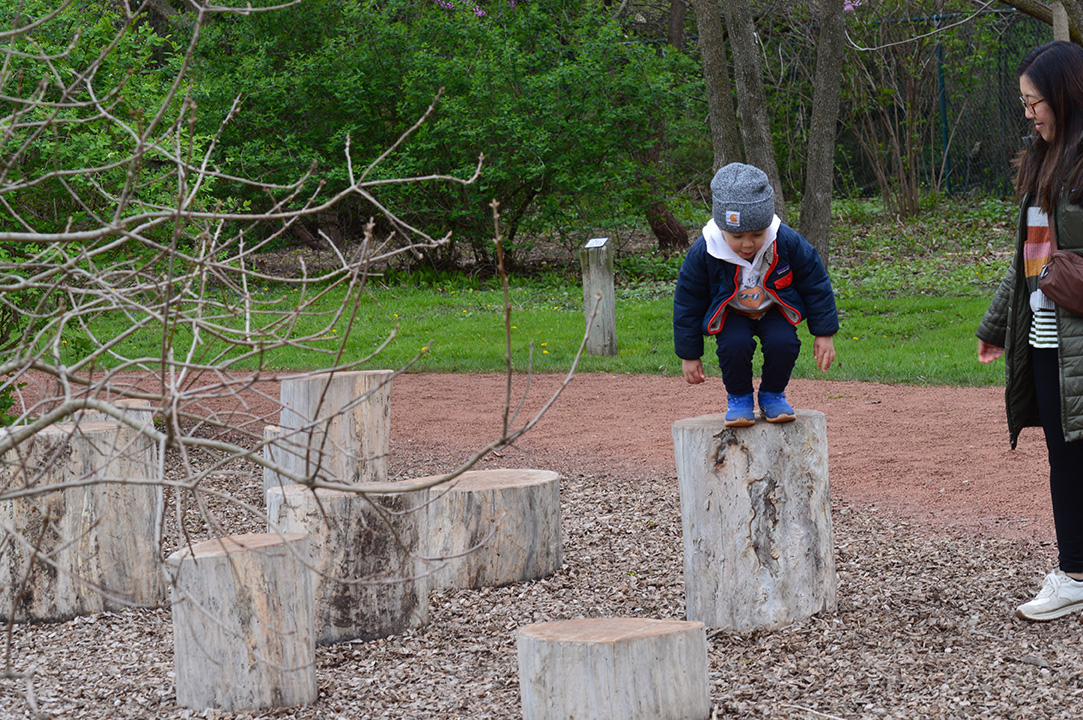
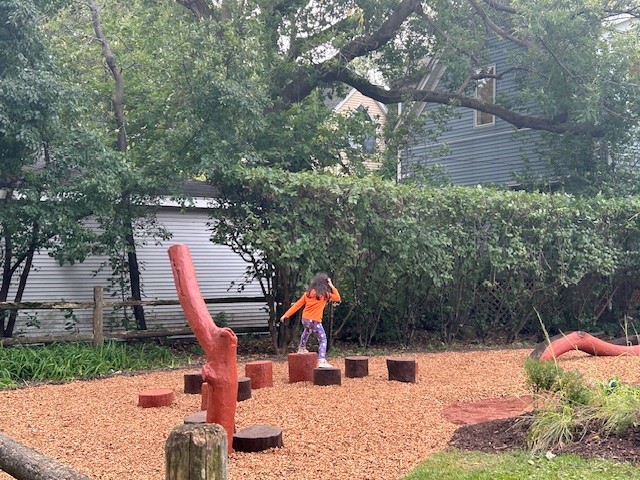
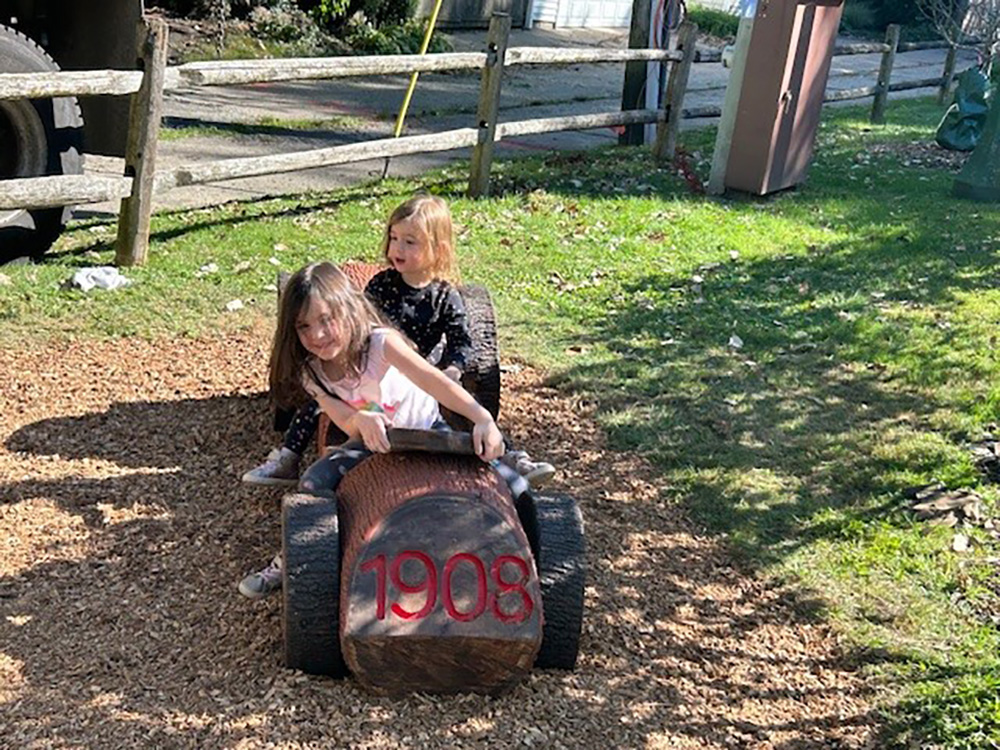
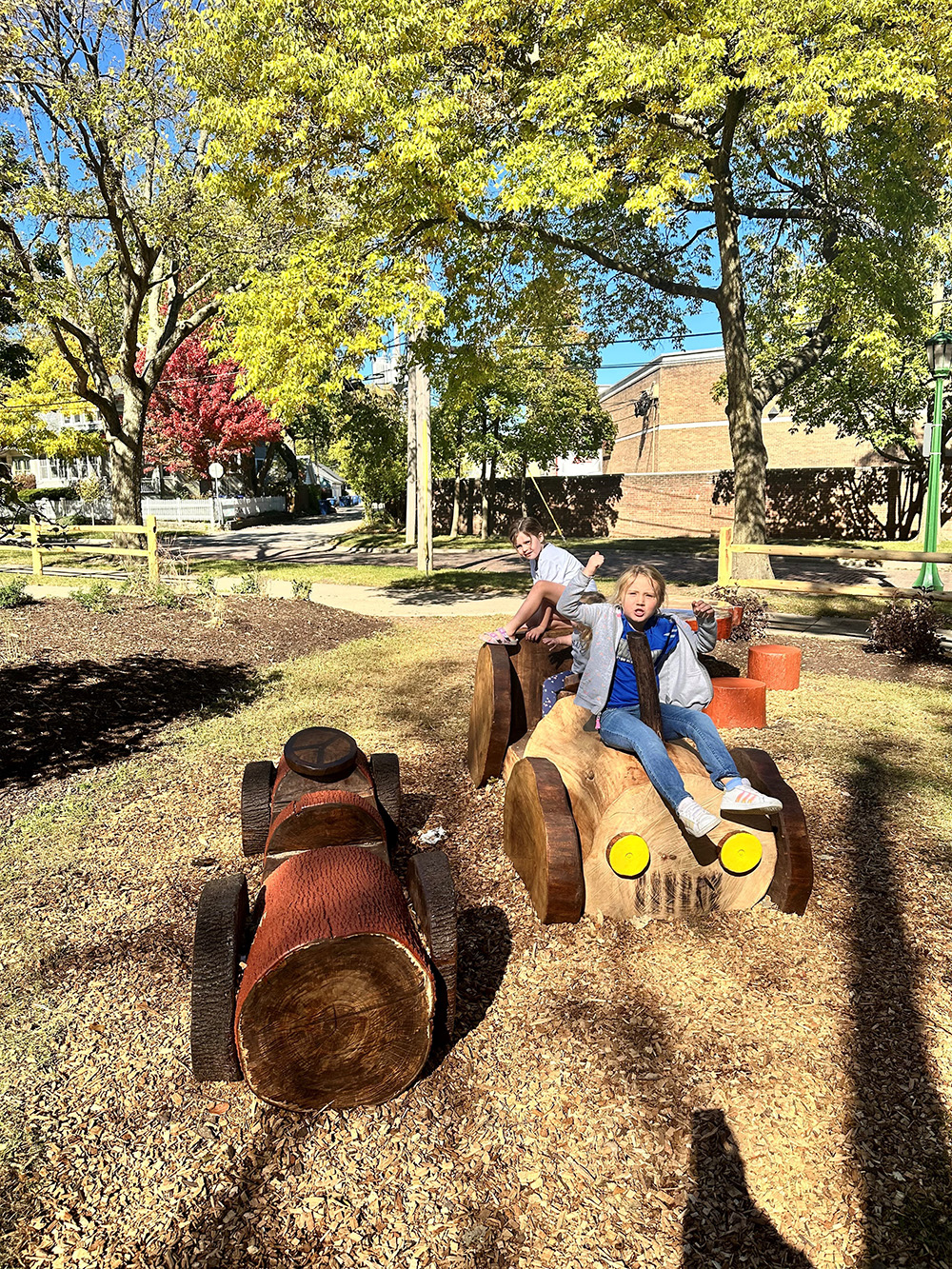
Nature play is unstructured, child-led outdoor activity that connects children with natural elements such as dirt, water, mud and trees. It supports fine motor skill development, strengthens cardiovascular and immune health, enhances problem-solving and creativity and fosters social skills through teamwork, negotiation and conflict resolution.
Click the tabs below to learn more about each location pin—numbers correspond to each of our distinct native landscapes:
1) Keay Nature Center
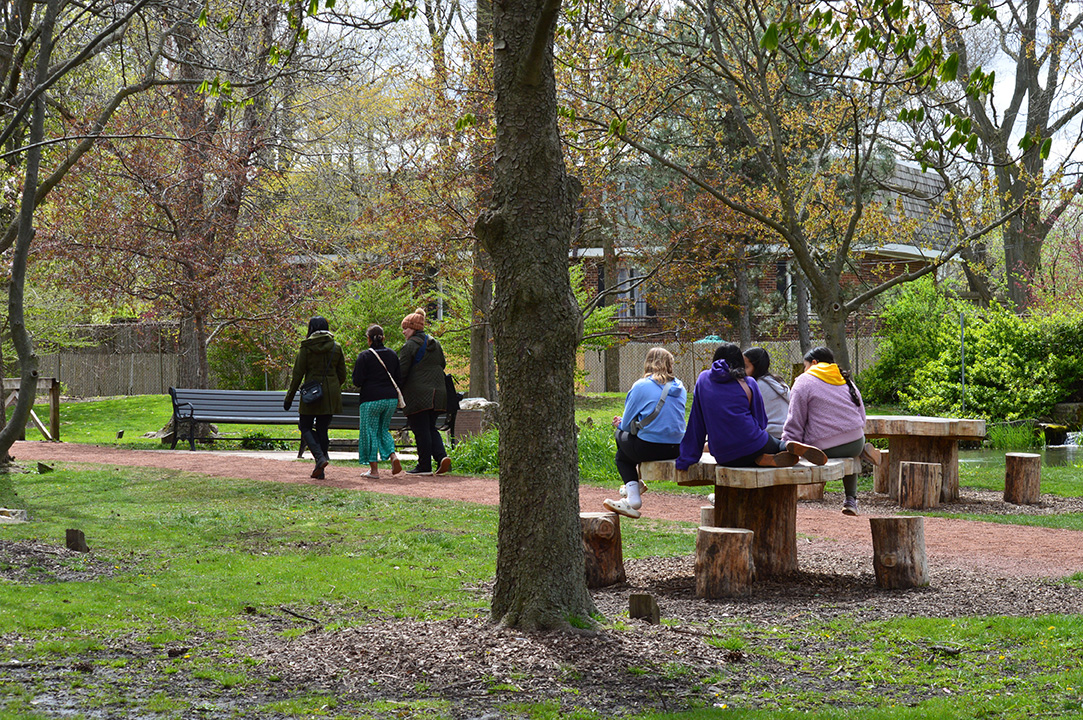
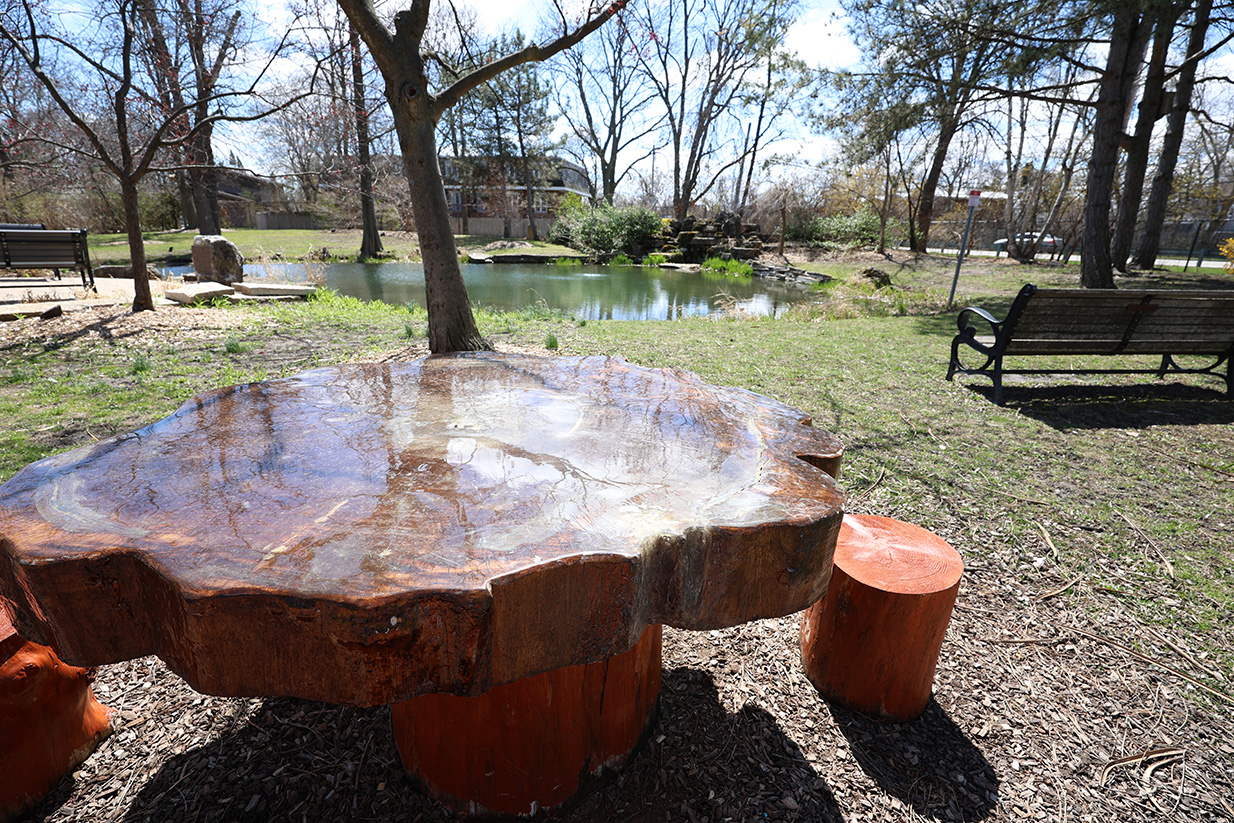
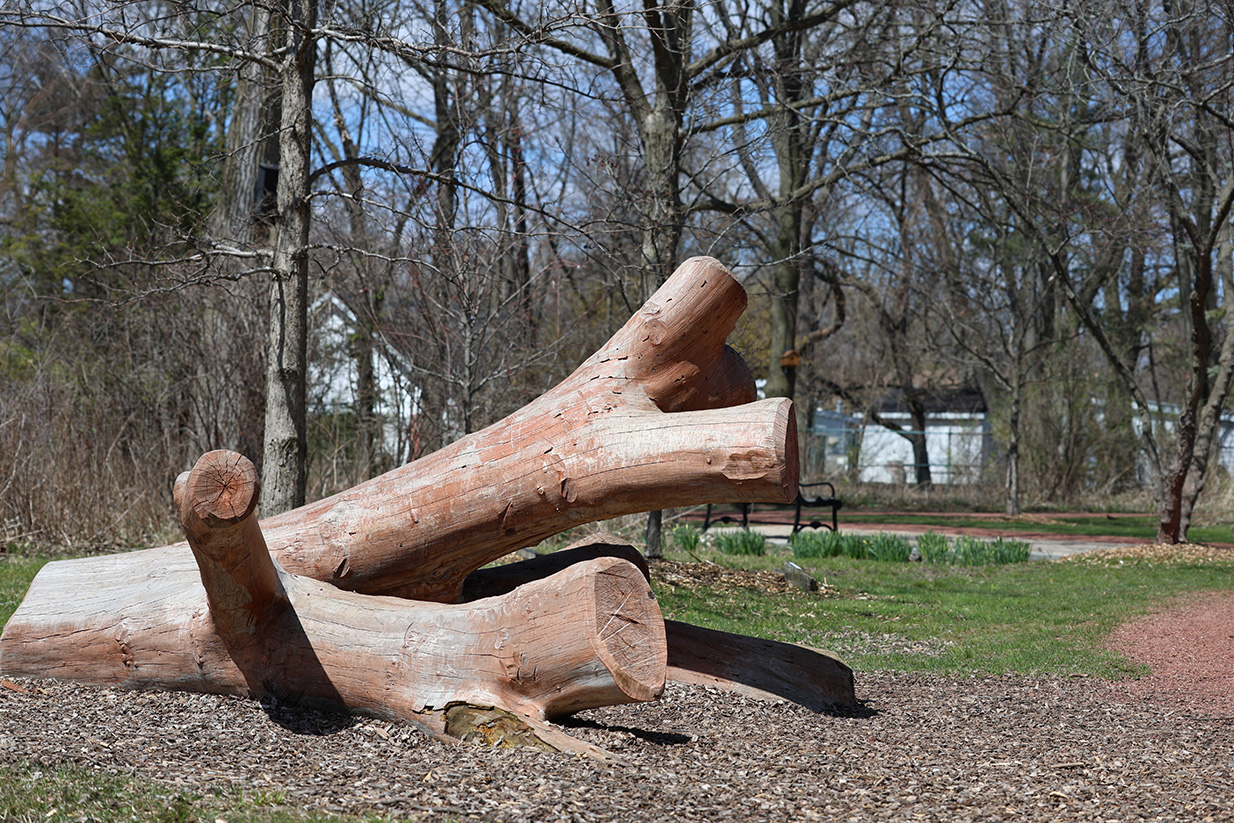
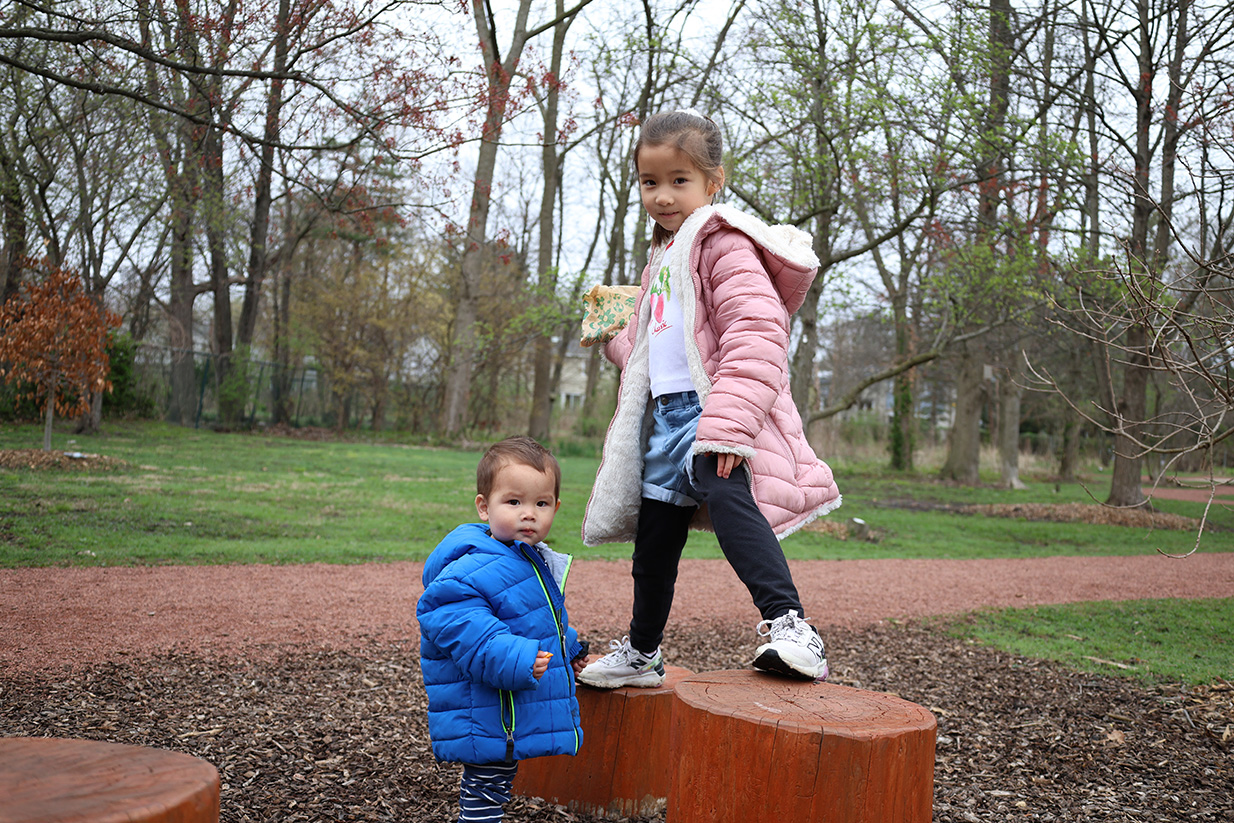
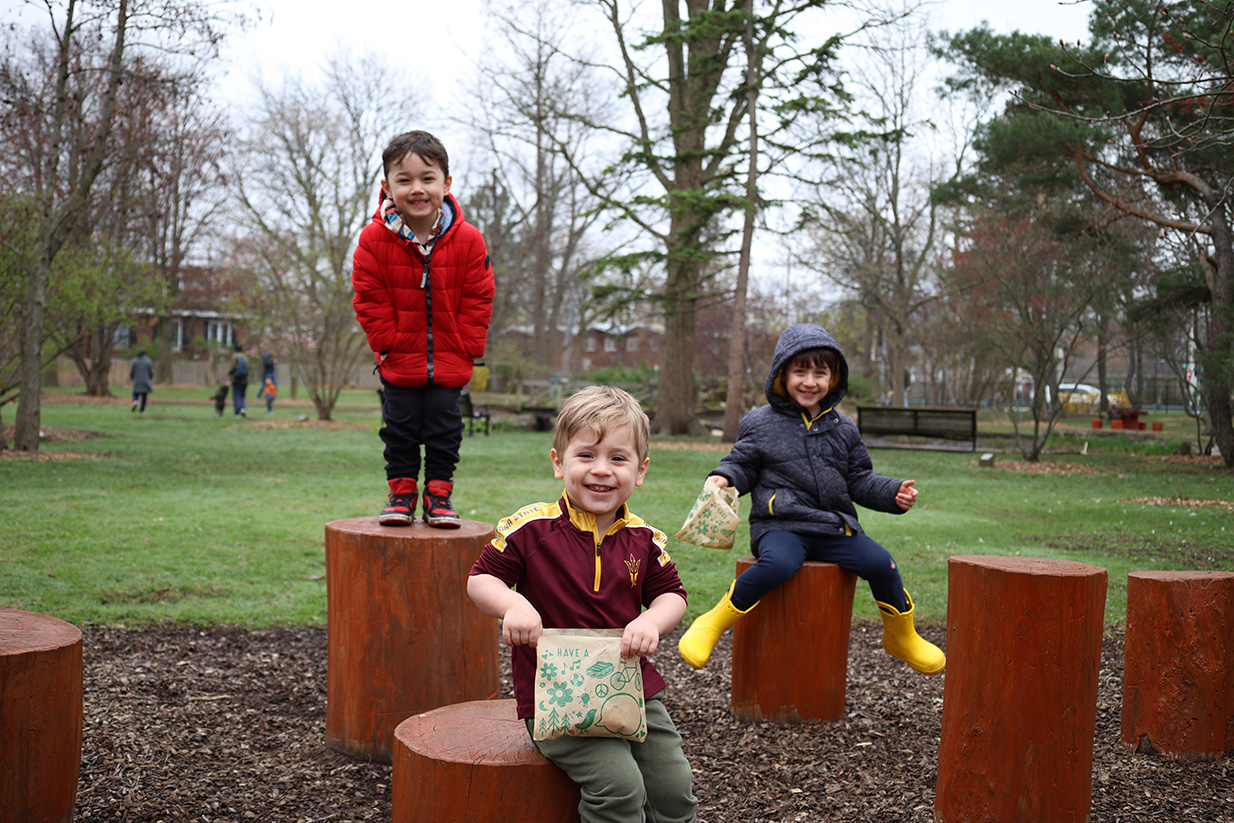
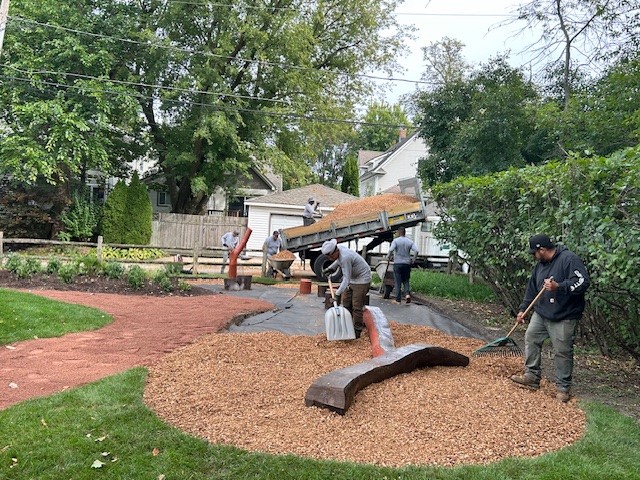
Between October 2022 and the spring of 2023, Wilmette Park District completed a series of improvements at Keay Nature Center. Partially funded by a generous donation from the Ouilmette Foundation, improvements included path and grounds improvements, but most notable was the installation of new nature play areas throughout the park.
Along the trail, patrons encounter several bumpouts with features made from locally sourced dead and declining trees. To learn more about the project and other improvements, visit the project page.
2) Wheeler Park
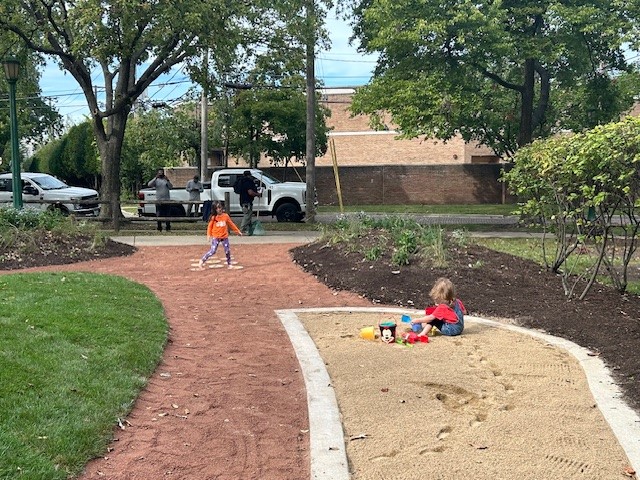
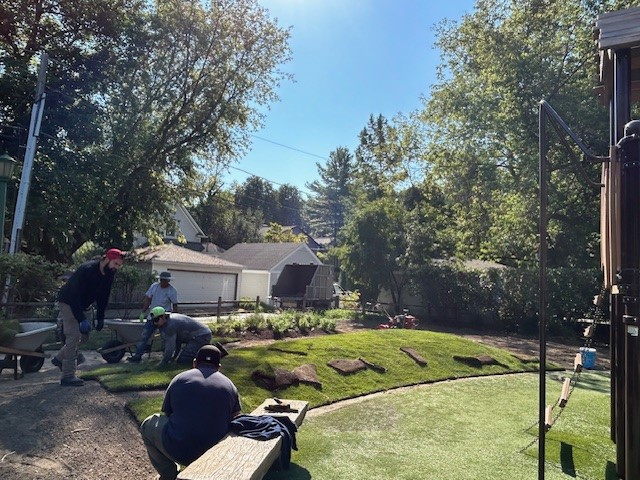
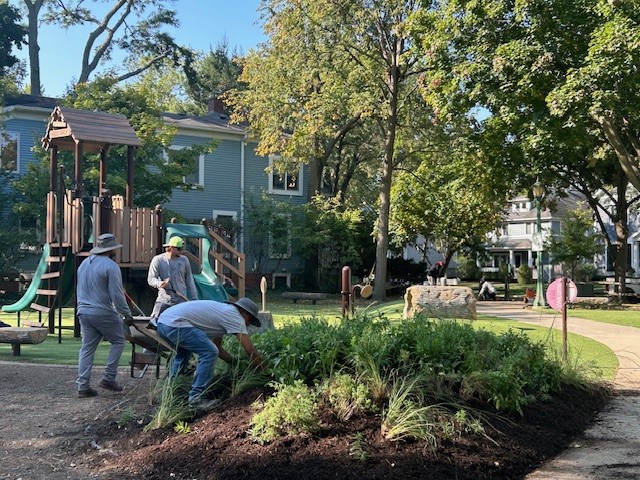
In April and May of 2024, the proposed landscape plan for Wheeler Park was revised based off feedback from the Park Board as well as the response gleaned from a Public Input Meeting with neighbors of the park. The plan was approved by the Board of Park Commissioners in June 2024, and work soon began to refresh Wheeler Park’s useful life with native plantings and nature play elements – and to help connect children to nature.
Directly east of the existing tot lot, new nature play elements were installed along with native plants. To learn more about the project and other improvements, visit the project page.
3) Maple Park
Nature Play! Coming this Fall to Maple Park – learn more on the project page!
Download PDF

Save This Page as a PDF